Electrical equipment manufacturing turns electrical designs into machines, parts, appliances, and power-distribution products that buyers install, test, ship, and repair. The sector feeds power supply, distribution, automation, transportation, information technology, factory operations, and the systems that keep buildings running. Manufacturers start from drawings, materials, control specifications, and safety rules, then build products that move, transform, protect, or use electricity.
The global electrical equipment market covers the companies and products tied to making this equipment worldwide. It spans the generation, transmission, distribution, and use of electric power, and includes devices, components, generators, transformers, and related power products. The electrical equipment manufacturing industry connects power production with the equipment that makes electricity safe, controllable, and useful across the economy.
What the industry covers
Factories in this industry make power, control, appliance, lighting, and component products for utilities, plants, buildings, transport systems, and homes. Work begins with electrical engineering requirements and ends with goods built for power infrastructure and end-use equipment. The range is broad, yet every product helps electricity move, switch, store, protect, or perform work.

Market figures track companies and products across the field. Fortune Business Insights values the global electrical equipment market at USD 1,660.20 billion in 2025, projects USD 1,822.88 billion in 2026 and USD 4,151.57 billion by 2034, and forecasts a 10.80% CAGR from 2026 to 2034. (source: Fortune Business Insights, Electrical Equipment Market, 2026 – fortunebusinessinsights.com/electrical-equipment-market-109921)
| U.S. industry brief item | NAICS 33531 detail |
|---|---|
| Industry code | The U.S. electrical equipment manufacturing operates under NAICS industry code 33531. (source: U.S. Census Bureau, NAICS 33531 – census.gov/naics) |
| Covered products | NAICS 33531 covers power, distribution, and specialty transformers, electric motors, generators and motor-generator sets, switchgear and switchboard apparatus, relays, and industrial controls. (source: U.S. Census Bureau, NAICS 33531 – census.gov/naics) |
| Market size | IBISWorld puts U.S. electrical equipment manufacturing revenue at USD 81.4 billion in 2026. (source: IBISWorld, Electrical Equipment Manufacturing in the US, 2026 – ibisworld.com/united-states/industry/electrical-equipment-manufacturing/795) |
| Business count | IBISWorld counts 1,639 U.S. businesses in 2026; the largest are Schneider Electric SE, Eaton Corporation, and ABB. (source: IBISWorld, Electrical Equipment Manufacturing in the US, 2026 – ibisworld.com/united-states/industry/electrical-equipment-manufacturing/795) |
| Tariff exposure | IBISWorld notes the industry is significantly exposed to both import and export tariffs, since imports and exports each account for a high share of industry revenue. (source: IBISWorld, Electrical Equipment Manufacturing in the US, 2026 – ibisworld.com/united-states/industry/electrical-equipment-manufacturing/795) |
Table 1: U.S. electrical equipment manufacturing (NAICS 33531) is a USD 81.4 billion industry of roughly 1,639 firms in 2026.
What electrical equipment manufacturing is
Electrical equipment manufacturing is the industrial work of product design, production, and component assembly for equipment that generates, distributes, and uses electric power. Engineering teams set electrical ratings, mechanical layouts, safety requirements, and production tolerances before a line starts. Production teams then fabricate, wind, assemble, wire, test, and package equipment for commercial and industrial buyers.
Electric lighting equipment manufacturing centers on lighting devices, fixtures, and related systems. Component manufacturing makes parts and assemblies used inside electrical devices, systems, and machinery; these producers supply inputs that other manufacturers place inside larger products rather than always building the finished unit. The market boundary takes in electrical lighting, signalling equipment, household appliances, and products that generate, distribute, and use electrical power, which makes the industry wider than heavy power equipment alone.

Everything above plays out on the shop floor, where each order becomes a finished, tested unit. That is the part Andea GridUp handles.
Electrical as a manufacturing sector
The electrical equipment, appliance, and component manufacturing subsector sits inside manufacturing. It groups establishments that make electrical goods, not companies that sell electricity as a utility service. This classification lets analysts compare output, revenue, employment, and supply-chain exposure across manufacturing industries.
Plants in this subsector manufacture products that generate, distribute, and use electrical power. They buy inputs, run assembly lines, apply quality checks, and ship finished goods to downstream buyers. That structure separates electrical manufacturing from construction contractors, utilities, and engineering-service firms.
Over the five years to 2026, U.S. electrical equipment manufacturing revenue grew about 9.3% a year on average, and IBISWorld expects 7.8% growth in 2026. (source: IBISWorld, Electrical Equipment Manufacturing in the US, 2026 – ibisworld.com/united-states/industry/electrical-equipment-manufacturing/795) This is a manufacturing subsector first, even though its products support digital and energy systems.
Core product categories
Electrical equipment manufacturing groups products into power generation, transmission and distribution, lighting, appliances, batteries, wiring, control, and protection equipment. These categories organize factory output for utilities, buildings, industrial sites, transport systems, and consumer markets, and let buyers compare products by function rather than brand.
Power generation covers generators, turbines, and machinery that produce electricity. Transmission and distribution moves electricity from generation sites to end users through grids, substations, and distribution equipment. Switchgear controls, protects, and isolates power systems when circuits need switching or faults need stopping.
Household appliance products include small and major appliances and parts. Wire and cable products carry electricity or signals inside electrical systems. Control equipment includes relays and other automation parts that monitor, regulate, and automate electrical processes.
RFID/IoT vendor GAO RFID Inc. divides the subindustry into four parts: electric power generation, electric power distribution, industrial automation, and lighting systems. (source: GAO RFID Inc. – gaorfid.com/electrical-equipment-manufacturing-industry) By type, Fortune Business Insights identifies power generation as the segment that captures the highest market share. By application, Fortune Business Insights reports that the non-residential segment held a 67.35% share in 2025, supported by heavy electrical equipment such as power-generation motors, transformers, and commercial electrical devices. (source: Fortune Business Insights, Electrical Equipment Market, 2026 – fortunebusinessinsights.com/electrical-equipment-market-109921)
Product categories by function
Factory output sorts into lighting, household appliances, core electrical equipment, storage devices, wiring, and rotating or switching machinery.
| Product taxonomy area | Manufacturing coverage |
|---|---|
| Electric lighting equipment | Establishments produce electric lamp bulbs, lighting fixtures, and parts. |
| Household appliances | Establishments make small and major electrical appliances and parts. |
| Electrical equipment | Establishments make goods such as electric motors, generators, transformers, and switchgear apparatus. |
| Batteries and storage devices | Establishments make devices that store electrical power. |
| Wires, cables, and wiring devices | Establishments make products that transmit electricity and connect circuits. |
| Motors, generators, transformers, switchgear | Manufacturers build transformers, circuit breakers, wiring devices, and power generators. |
Table 2: Factory output splits into six product families: lighting, appliances, core electrical equipment, storage, wiring, and rotating or switching machinery.
Market segments and their role
Each segment plays a distinct part in producing, moving, storing, connecting, or using electricity.
| Segment | Role in the market |
|---|---|
| Power generation | Policies that promote sustainable power generation and clean energy support segment leadership by type. |
| Transmission and control equipment | Transports and distributes electricity from generation sites to end users. |
| Batteries | Store electrical power for equipment, backup systems, transport, and grid uses. |
| Wires and cables | Carry electricity or signals within buildings, machines, vehicles, and utility networks. |
| Electric lighting equipment | Converts electrical input into illumination through lamps, fixtures, and modules. |
| Household appliances | Turn electrical power into refrigeration, washing, cooking, and other home functions. |
Table 3: Six market segments each cover a distinct stage – producing, moving, storing, connecting, or using electricity.
Common applications
Within those segments, specific products map to concrete functions across power, mobility, lighting, and buildings.
| Application | Typical function |
|---|---|
| Transformers | Change voltage levels for transmission, distribution, and equipment operation. |
| Wire harnesses | Bundle conductors for organized connections in vehicles, equipment, and appliances. |
| xEV batteries | Store energy for hybrid and electric vehicle propulsion. |
| LED light modules | Provide efficient illumination for fixtures, vehicles, signage, and buildings. |
| Solar combiner boxes | Consolidate photovoltaic circuit outputs before downstream power conversion. |
| Switchgear | Controls, protects, and isolates electrical circuits in power systems. |
| Circuit breakers | Interrupt electrical faults to protect equipment and wiring. |
| Relays | Switch circuits through electrical control signals in automation and protection. |
| Power distribution units | Allocate electrical power to connected equipment in buildings and data systems. |
| Smart building systems | Use electrical controls, sensors, and connected devices to manage facility operations. |
Table 4: Ten common products, from transformers to smart building systems, map to specific electrical functions.
Business Research Insights reports that power generation, transmission and control, household appliances, wiring and cable, and electric lighting together represent 70% of total market activity. (source: Business Research Insights, Electrical Equipment Manufacturing Market – businessresearchinsights.com) By product type, the market splits into generators, transformers, switchgear, electric motors, batteries, and wires and cables. These categories cover the equipment that produces, moves, controls, stores, connects, and uses electricity.
How the value chain fits together
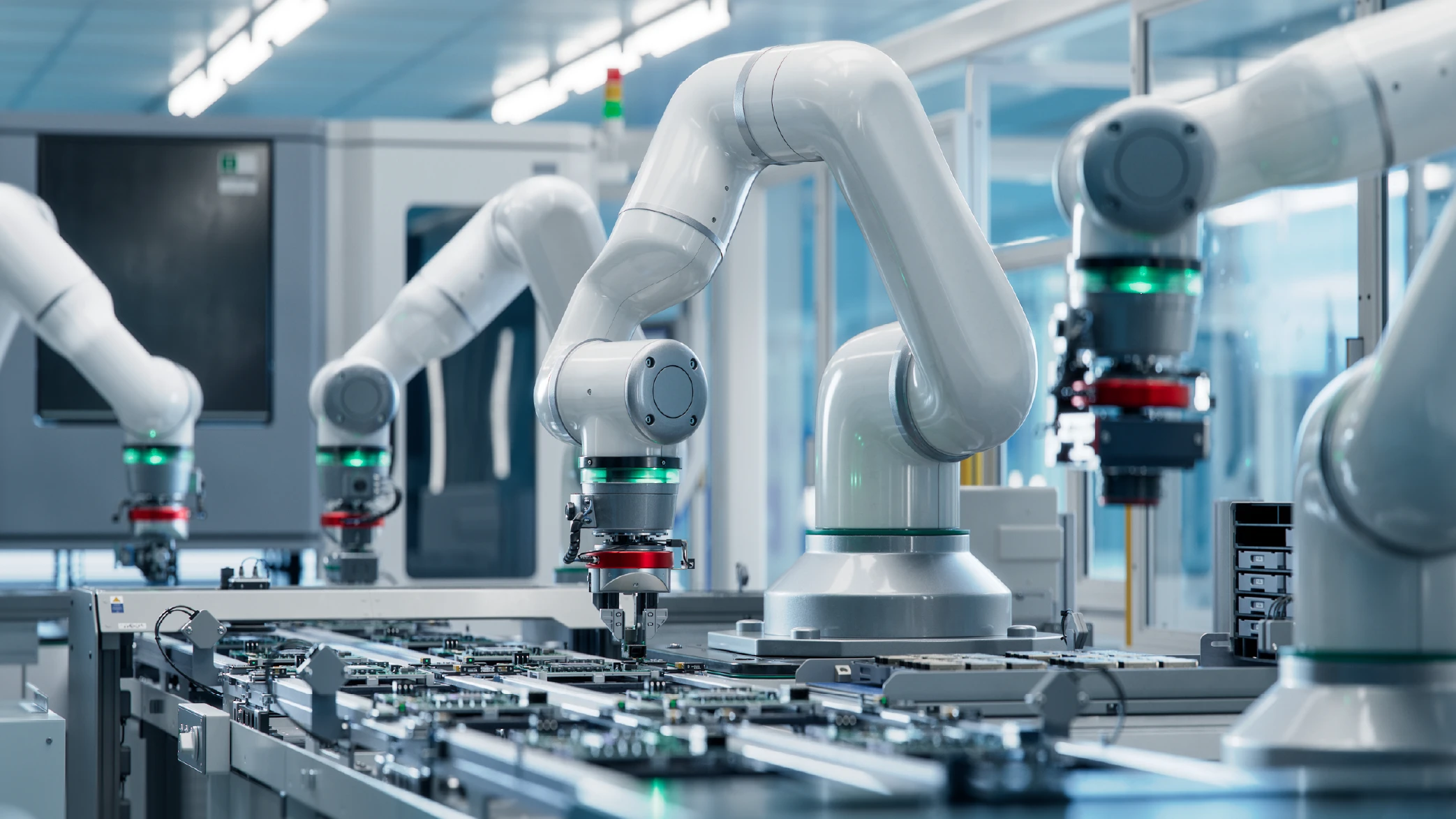
The value chain links materials, components, production assets, compliance controls, and distribution data from the factory floor to the customer. Automation, precision engineering, and quality control help plants raise output and product safety. Parts arrive, workers and machines build, inspectors test, and finished units move out.
RFID (radio-frequency identification) tracks assets, components, tools, and products in manufacturing settings. Industry 4.0 uses connected, automated, and data-driven technologies in industrial production. Digital technology covers the electronic and software tools that improve automation, monitoring, and factory decisions.

The Occupational Safety and Health Administration (OSHA), a U.S. workplace-safety regulator, sets standards for wiring design, equipment installation, and safe work practices. (source: OSHA SIC Manual Major Group 36 – osha.gov) The International Electrotechnical Commission (IEC) develops electrical and electrotechnical safety standards; IEC 60335 applies to household appliances. For information technology and audio/video equipment, IEC 62368-1 is the current safety standard, having replaced the withdrawn IEC 60950-1 (withdrawn in most markets on 20 December 2020). (source: IEC 62368-1 / 60950-1 withdrawal – intertek.com)
Fortune Business Insights estimates that electrical equipment accounts for roughly 50% of plant energy use. (source: Fortune Business Insights, Electrical Equipment Market, 2026 – fortunebusinessinsights.com/electrical-equipment-market-109921) Business Research Insights reports that high production costs and shifting raw-material prices weigh on manufacturers’ margins, and points to operational-efficiency gains from Industry 4.0 adoption, AI-driven automation, and energy-efficient solutions. (source: Business Research Insights, Electrical Equipment Manufacturing Market – businessresearchinsights.com)
The operating logic stays straightforward: track the parts, control the process, meet the rules, and use data to cut waste.
Tracking and monitoring technologies
RFID, BLE sensors, IoT meters, and drones give plants real-time visibility over assets, energy use, and inspections. (source: GAO RFID Inc. – gaorfid.com/electrical-equipment-manufacturing-industry)
| Technology | Value-chain use case | Operational result |
|---|---|---|
| RFID | Tracks asset location and status in real time. | Faster identification of tools, work-in-progress, and finished goods. |
| RFID quality control | Tracks materials and components through production steps. | Quality teams uncover defects and connect them with specific batches and process stages. |
| BLE sensors | Monitor equipment performance in real time. | Maintenance teams use the data for predictive maintenance. |
| IoT sensors and RFID | Monitor energy usage in real time. | Plant managers optimize energy consumption during production. |
| Drone-related technologies | Inspect large facilities, storage areas, roofs, and yard assets. | Safety teams reduce manual checks in hard-to-access locations. |
Table 5: RFID, BLE sensors, IoT, and drones add real-time tracking, monitoring, and inspection across the value chain.
| RFID case | Implementation focus | Value-chain impact |
|---|---|---|
| Siemens Energy Management | Used RFID to track production progress. | Improved supply-chain efficiency. |
| General Electric | Used RFID in a transformer manufacturing plant. | Improved supply-chain efficiency and visibility. |
Table 6: Vendor-reported RFID deployments at Siemens and General Electric improved supply-chain efficiency and visibility (GAO RFID Inc.).

Standards and regulators
OSHA governs safe wiring and installation; IEC sets product-safety standards (IEC 60335 for appliances, IEC 62368-1 for IT/AV equipment), alongside FDA, EPA, DOE, CPSC, DOT, and ISO touchpoints.
Regulatory and standards touchpoints across the chain:
- FDA UDI: regulated products may require unique device identification before shipment.
- AIM RFID guidelines: tag selection, data capture, and reader deployment can align with recognized RFID practices.
- EPCglobal: product and asset identifiers support interoperable supply-chain tracking.
- OSHA: wiring design, installation practices, lockout controls, and electrical-hazard training require documentation. (source: OSHA SIC Manual Major Group 36 – osha.gov)
- EPA: environmental controls cover materials, waste streams, emissions, and facility reporting.
- DOE: energy-efficiency requirements affect motors, transformers, appliances, and related products.
- CPSC: consumer-safety obligations apply to household electrical products and appliance risks.
- DOT: batteries, hazardous materials, and regulated electrical components require transport classification.
- TSSA: pressure, fuels, elevator, or related technical-safety obligations may apply.
- IEC: product design and testing can be mapped against relevant electrical-safety standards.
- ISO: quality, environmental, cybersecurity, and safety management systems support operations.
Market restraints
Supply-chain disruptions, raw-material price swings, tariffs, and skilled-labor shortages are the main pressures on margins.
| Market restraint | Value-chain pressure |
|---|---|
| Supply-chain disruptions | Delay components, metals, electronics, and finished-equipment deliveries. |
| Raw-material price volatility | Price swings raise quoting risk and production-cost uncertainty. |
| Tariffs | Raise landed costs for imported inputs and finished products. (source: IBISWorld, Electrical Equipment Manufacturing in the US, 2026 – ibisworld.com/united-states/industry/electrical-equipment-manufacturing/795) |
| High production costs | Higher labor, energy, compliance, and material costs compress margins. |
| Regulatory load | Safety, environmental, transport, and product rules increase documentation work. |
| Market volatility | Demand swings complicate inventory planning and capacity allocation. |
| Skilled-worker shortages | Labor shortages constrain output despite healthy order books. (source: IBISWorld, Electrical Equipment Manufacturing in the US, 2026 – ibisworld.com/united-states/industry/electrical-equipment-manufacturing/795) |
| Technology-adoption gap | Fast technological change challenges smaller manufacturers. (source: Business Research Insights, Electrical Equipment Manufacturing Market – businessresearchinsights.com) |
Table 7: Supply-chain, raw-material, tariff, cost, labor, and technology pressures are the main constraints on the sector.
On the shop floor, manufacturers manage cost, compliance, skills, and technology adoption at the same time. A single budget cycle may demand better sensors, trained workers, safer wiring practices, and tighter purchasing controls.
Industry 4.0 on the production line
AI, robotics, IoT, digital twins, and predictive maintenance reshape how plants schedule, build, inspect, and service equipment.
| Industry 4.0 topic | Manufacturing application |
|---|---|
| AI | Supports scheduling, defect detection, demand planning, and process optimization. |
| Robotics | Automates repetitive assembly, handling, welding, and inspection. |
| IoT | Connects machines, meters, sensors, and production systems for live monitoring. |
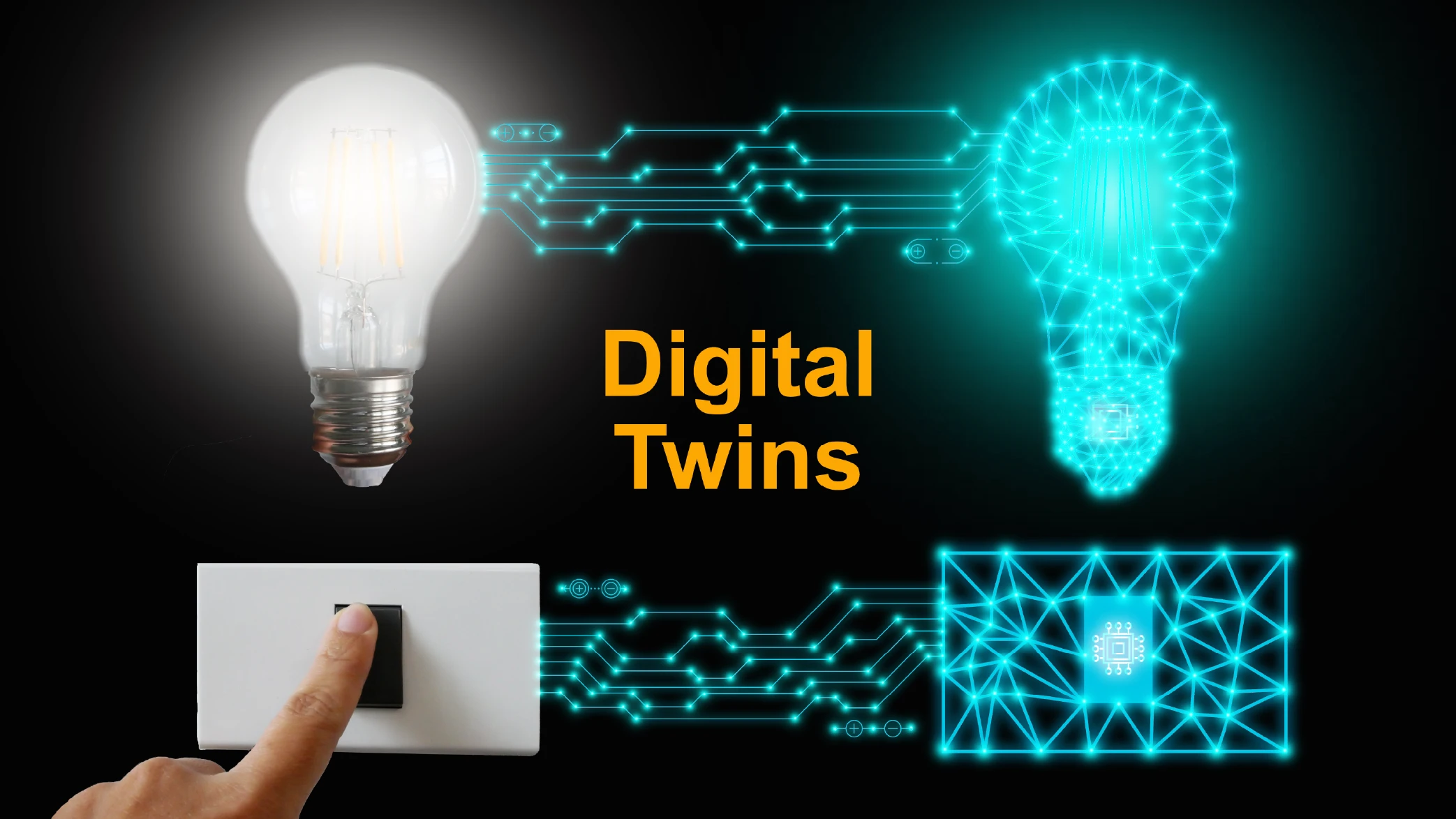
| Digital twins | Model products, lines, and assets before physical changes occur. |
| Smart factories | Combine connected equipment, analytics, and automated workflows. |
| Predictive maintenance | Uses equipment data to schedule service before failures. |
| Automated quality control | Checks dimensions, electrical performance, and process variation. |
Table 8: AI, robotics, IoT, digital twins, and predictive maintenance reshape scheduling, building, inspection, and service on the line.

Cybersecurity for connected devices
Connected equipment shifts security earlier, from product architecture and authentication through patching and incident response.
| Cybersecurity theme | Connected-device control |
|---|---|
| Security by design | Engineering teams define security requirements during product architecture and firmware planning. |
| Hardware security | Design teams protect device identity, boot processes, and physical access points. |
| Network protocols | Product teams select secure industrial communication protocols. |
| Authentication | Systems authenticate users, devices, services, and maintenance tools before access. |
| Vulnerability management | Manufacturers track, test, patch, and disclose product vulnerabilities. |
| Compliance | Teams align cybersecurity controls with customer, sector, and jurisdiction requirements. |
| Incident response | Support teams prepare escalation paths for compromised devices and networks. |
| Customer support | Manufacturers provide update guidance, configuration support, and security documentation. |
Table 9: Securing connected equipment spans design, hardware, networks, authentication, patching, compliance, and incident response.
Rising global demand, new factory technology, and investment in automation keep reshaping the market. Buyers want equipment that is safe, efficient, connected, and traceable. For manufacturers, the work comes down to tracked materials, controlled production, safety compliance, connected assets, and data-led operations.
Leading companies
Schneider Electric, Siemens, ABB, Eaton, General Electric, and Mitsubishi Electric lead the sector, competing across power equipment, automation systems, wiring products, appliances, controls, and components through product range, global supply networks, and digital capability. A broad catalog helps, yet customers also expect software, service, and compliance support.
General Electric ties to power, energy, and electrical-equipment technologies. Schneider Electric specializes in energy management, automation, switchgear, and electrical distribution. Eaton Corporation produces electrical components, switchgear, and control equipment.
Siemens AG connects electrical manufacturing with automation, electrification, and industrial systems. Siemens Energy focuses on power generation, transmission, and related infrastructure. Mitsubishi Electric produces automation, power systems, and control equipment.
Schneider Electric reported revenue of about EUR 35.9 billion in 2023, employed roughly 168,000 people that year, and operates in more than 100 countries. (source: Schneider Electric company profile & FY2023 results – se.com) In April 2023 it launched the Easy UPS 3-Phase Modular, a three-phase modular UPS rated 50–250 kW (400 V) with live-swappable power and static-switch modules. (source: Schneider Electric press release, Easy UPS 3-Phase Modular, 2023 – se.com) General Electric reported total revenue of about USD 68.0 billion for 2023; the company then split into GE Aerospace, GE Vernova, and GE HealthCare. (source: General Electric 4Q & FY2023 results – ge.com/news/reports/ge-releases-its-4q23-results)
Company directory
The table below maps major manufacturers to their primary product focus.
| Company | Sector role or product focus |
|---|---|
| ABB | Power, automation, motors, and electrification products. |
| Legrand | Wiring devices and electrical infrastructure. |
| Schneider Electric | Switchgear and control equipment for energy management and electrical distribution. |
| General Electric | Power, energy, and service-based industrial technologies. |
| Siemens AG | Automation, electrification, and industrial systems. |
| Siemens Energy | Power generation and electrical infrastructure. |
| Panasonic Holdings | Household appliances, batteries, and electrical devices. |
| Robert Bosch GmbH | Industrial, mobility, and electrical-equipment solutions. |
| Samsung | Electronics and electrical products. |
| Southwire | Wire and cable, tools, and power-management solutions for utilities, construction, and renewable energy. |
| C&S Electric | Electrical equipment for power generation, distribution, and control in India. |
| People Electric Appliance Group | Circuit breakers, transformers, and modular electrical components. |
| FINDER | Industrial automation and electrical components: relays, timers, lighting, energy-management devices. |
| Raychem RPG | Power-cable accessories, transformers, and safety systems. |
| WESCOSA | Transformers, switchgear, and related products for energy and construction clients. |
| MENNEKES Electrical Products | Wiring devices, interlocked receptacles, motor disconnect switches, power-distribution solutions. |
| Terasaki Electric | Low-voltage circuit breakers for industrial, marine, and commercial sectors. |
| Havells India | Cables, lighting, switchgear, and consumer electrical products. |
| Honeywell International | Automation, control, and sensing systems. |
| Bajaj Electricals | Lighting, appliances, and consumer electrical goods. |
| Sumitomo | Electrical components, cables, and related infrastructure products. |
Table 10: Twenty-one major manufacturers mapped to their primary product focus across power, automation, wiring, appliances, and components.
Larger players separate themselves by supporting products after they leave the plant, through digital twins, predictive-maintenance algorithms, and IoT-enabled device connectivity. The companies shaping the sector combine manufacturing, electrification knowledge, digital systems, and global scale.
Where electrical equipment is used
Electrical equipment manufacturing sector supplies products used across manufacturing, IT, healthcare, telecommunications, utilities, buildings, transportation, and homes. Equipment supports power conversion, control, storage, monitoring, and end-use functions in each market, showing up in panels, chargers, lighting systems, motors, batteries, and the controls hidden inside larger machines.
Growth in manufacturing, IT, healthcare, and telecommunications raises demand for electrical machinery. Buyers seek equipment with IoT, real-time monitoring, AI, and cost-saving features, and modern household and commercial equipment advances as those technologies improve monitoring, control, and efficiency. Urbanization raises demand for electrical appliances across residential, commercial, and industrial applications. (source: Fortune Business Insights, Electrical Equipment Market, 2026 – fortunebusinessinsights.com/electrical-equipment-market-109921)
Transportation relies on electrical components, control systems, and power equipment. The EV market is set to grow as regulatory frameworks favor energy-efficient, long-life motors, and electric-vehicle components and battery-storage systems create rising demand that drives modernization. (source: Schneider Electric press release, Easy UPS 3-Phase Modular, 2023 – se.com)
Regional markets
Asia Pacific dominates output and demand, followed by North America and Europe, with Latin America, Africa, and the Middle East growing on electrification.
| Region or market | Definition and role | Market figure or relationship |
|---|---|---|
| Asia Pacific | Major regional market and a dominant manufacturing center. | 39.40% market share and USD 653.73 billion revenue in 2025, with USD 729.23 billion projected for 2026. (source: Fortune Business Insights, Electrical Equipment Market, 2026 – fortunebusinessinsights.com/electrical-equipment-market-109921) |
| China | Major Asia Pacific manufacturing hub and market. | Projected at USD 453.27 billion by 2026. (source: Fortune Business Insights, Electrical Equipment Market, 2026 – fortunebusinessinsights.com/electrical-equipment-market-109921) |
| India | Growing market for equipment, power infrastructure, and consumer products. | Projected at USD 76.99 billion by 2026. (source: Fortune Business Insights, Electrical Equipment Market, 2026 – fortunebusinessinsights.com/electrical-equipment-market-109921) |
| Japan | Advanced market with major electrical and electronics manufacturers. | Projected at USD 92.29 billion by 2026. (source: Fortune Business Insights, Electrical Equipment Market, 2026 – fortunebusinessinsights.com/electrical-equipment-market-109921) |
| South Korea | Significant electronics and electrical-equipment manufacturing activity. | Supports regional production capacity. |
| North America | Regional market backed by research institutions, startups, and established firms. | 28.20% global market share and USD 468.55 billion in 2025, projected at USD 510.05 billion in 2026. (source: Fortune Business Insights, Electrical Equipment Market, 2026 – fortunebusinessinsights.com/electrical-equipment-market-109921) |
| U.S. | Major North American market for manufacturing, regulation, and deployment. | Utilities and large power users drive demand by replacing aging grid infrastructure and preparing for higher load from EVs and data centers. |
| Canada | Manufacturing, safety regulation, and industrial applications. | Part of North American demand and deployment. |
| Europe | Strong industrial base; hub for renewable energy, EVs, and smart grids. | Part of the global market. |
| Germany | Leading European industrial economy with strong electrical-engineering capability. | Supports Europe's industrial equipment base. |
| Latin America | Regional market for manufacturing and infrastructure development. | USD 92.41 billion in 2025 (5.50% of the global market), projected at USD 99.95 billion in 2026. (source: Fortune Business Insights, Electrical Equipment Market, 2026 – fortunebusinessinsights.com/electrical-equipment-market-109921) |
| Africa | Region where electrification and power-distribution needs support demand. | Electrification needs drive demand for distribution equipment. |
| Middle East | Market tied to energy, construction, and infrastructure projects. | Energy and construction projects support deployment. |
Table 11: Asia Pacific leads with a 39.40% share (USD 653.73 billion in 2025), ahead of North America at 28.20% and Europe.
Regional demand tracks infrastructure, electrification, industrial production, and consumer adoption. The same product families appear across regions, but use cases differ by power demand, grid maturity, and manufacturing depth. A utility upgrade, a data-center buildout, and a home-appliance sale all draw on the same industrial base.
Demand drivers
Renewable energy, EV growth, smart cities, infrastructure spending, government policy, and rising energy demand pull the market forward.
| Market driver | Demand effect |
|---|---|
| Renewable-energy adoption | Drives demand for transformers, inverters, and smart grids. |
| EV growth | Raises demand for motors, controls, charging equipment, battery systems, and power electronics. (source: Schneider Electric press release, Easy UPS 3-Phase Modular, 2023 – se.com) |
| Smart cities | Increase deployment of sensors, connected lighting, distribution systems, and building controls. |
| Infrastructure development | Increases use of switchgear, cables, transformers, and distribution equipment. |
| Government support | Shapes demand through efficiency rules, grid programs, EV policies, and clean-energy targets. |
| Rising energy demand | Increases replacement, upgrade, and capacity-expansion needs across power networks. (source: IEA, Electricity 2026 – iea.org/reports/electricity-2026) |
Table 12: Renewable energy, EVs, smart cities, infrastructure, government policy, and rising energy demand drive sector growth.
Buyer groups
Manufacturers sell to industry, wholesalers, retailers, utilities, commercial facilities, residential markets, and other businesses.
| Buyer group | How manufacturers sell into the market |
|---|---|
| Manufacturing industries | Supply machinery, controls, and facility power systems. |
| Wholesalers | Distribute electrical products to contractors, installers, and industrial buyers. |
| Retailers | Serve consumer, residential, and light-commercial demand. |
| Utilities | Receive grid equipment, protection devices, transformers, and distribution hardware. |
| Commercial facilities | Receive lighting, panels, controls, power-distribution units, and backup systems. |
| Residential markets | Receive appliances, wiring devices, lighting, breakers, and smart electrical products. |
| Other businesses | Integrate electrical equipment into buildings, products, and operations. |
Table 13: Manufacturers sell to industry, wholesalers, retailers, utilities, commercial facilities, residential markets, and other businesses.
Electrical equipment turns up wherever economies need power generation, distribution, automation, electrified transport, connected buildings, and energy-efficient devices. As EVs, data centers, grid upgrades, and smart buildings keep adding load, this manufacturing base stays close to industrial planning.