See Andea GridUp in action

The floor tells the story better than we can. Watch it.
It’s the quickest way to see if it fits how you actually build.

Start the tour
Supervisor Console UI for manufacturing, showing a list of production orders with details like order number, ERP status, quantity ordered, valuation, and progress. Includes search filters for efficient production planning and MES management.

Production challenges in electrical equipment manufacturing

Electrical equipment manufacturing (NAICS 33531) is built to order far more often than it is pulled off a shelf. A power transformer, a switchgear lineup, a custom motor: each one carries its own drawing, its own bill of materials, and its own test plan. That mix throws up six problems you see in plant after plant.

That first problem is the one making the other five harder to ignore. Demand isn't a future trend to plan for, it's already moving through the same plants that spent the slow years without investing in the systems to absorb it.

Demand has outrun capacity

Grid upgrades, electrification, and data-center buildouts have pushed order backlogs past what most plants were built to run, and years of underinvestment in shop-floor systems means there's no slack left to absorb it.

Every unit is different

Paper travelers and spreadsheets fall apart when the routing changes with each order, and the current revision is hard to keep in front of operators.  

Builds run long

A transformer can take months from core to final test, so status is easy to lose and hard to report.  

Testing is not optional

The dielectric, insulation-resistance, and routine tests have to happen, and a missed test that reaches the field becomes a recall.  

Traceability gets asked for late

Utilities and inspectors want unit-level records years after delivery, long after the paper has gone to a box.  

Skilled work is scarce

Coil winding, core stacking, and HV assembly depend on certified operators, and someone has to track who is signed off for which job.  

The demand behind these problems is climbing. Grid upgrades, electrification, EVs, and new data-center load all pull on the same transformer and switchgear output, which puts more one-off builds through the same plants. See our overview of the electrical equipment sector and its 2026 trends maps where that demand is heading: Electrical Equipment Manufacturing Industry: Sector Overview & Key Trends 2026 

One MES for production, quality, and maintenance

Production Execution & Planning
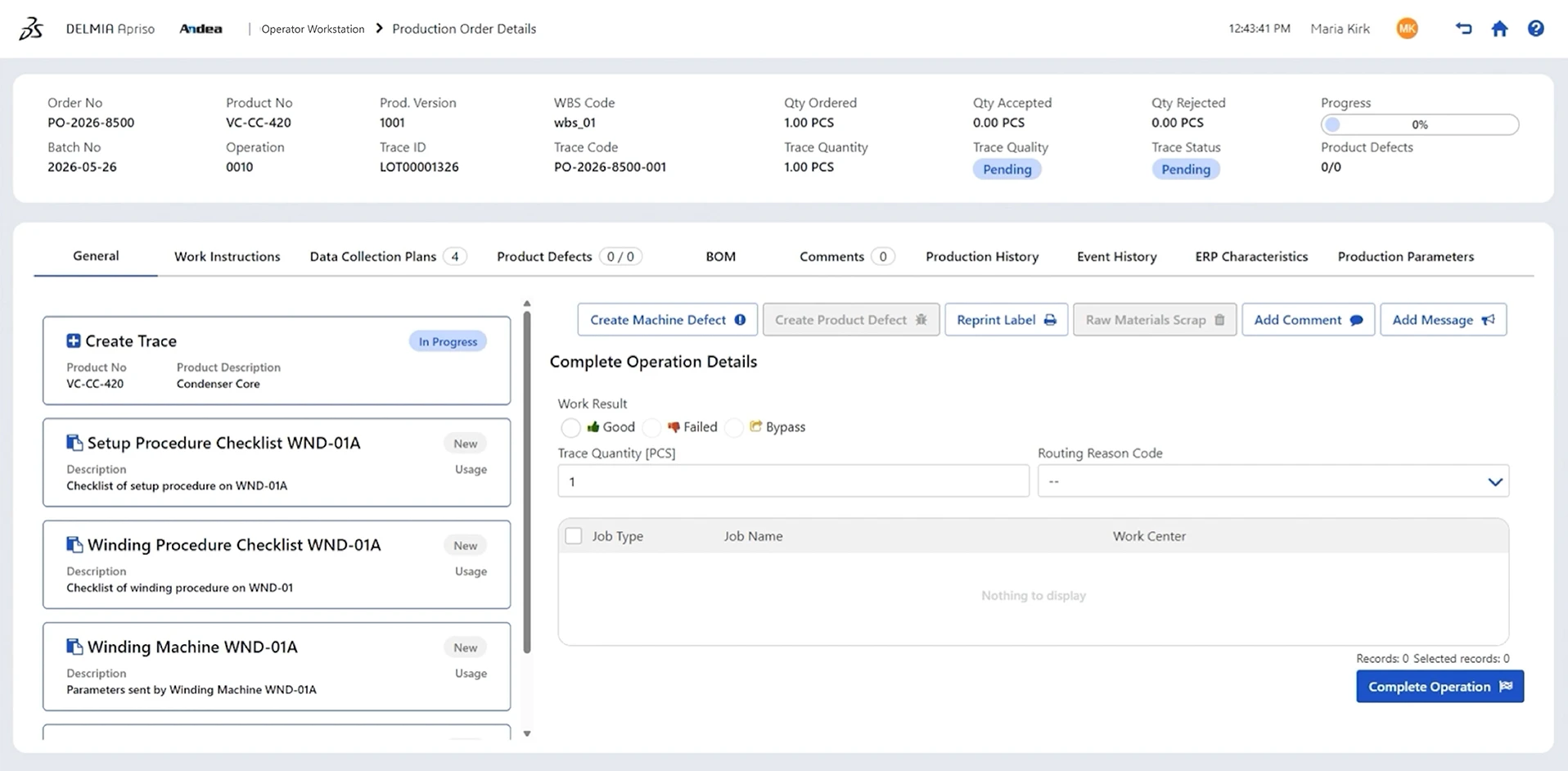
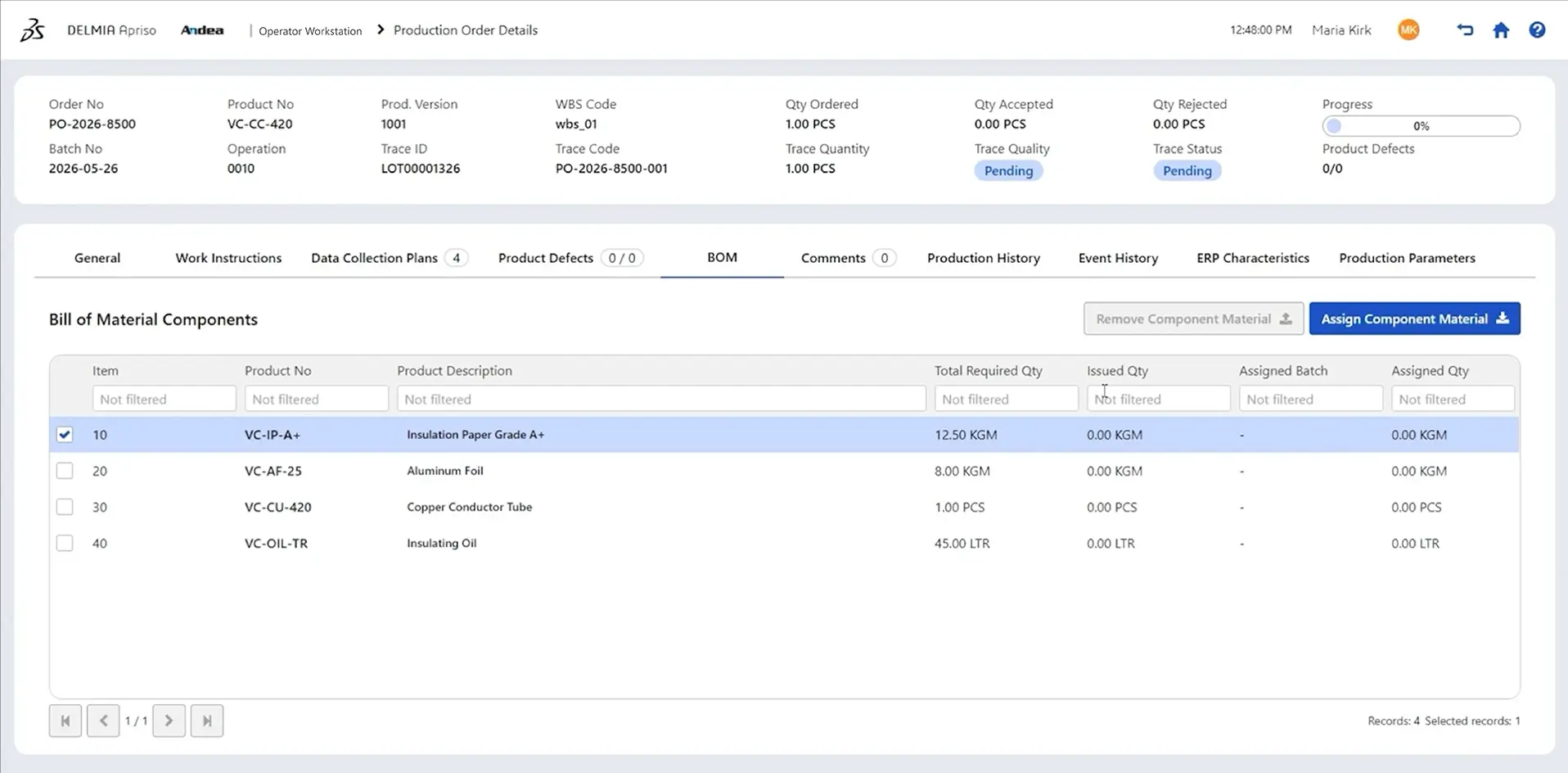
  • Operator Workstation: the screen operators follow for each build step
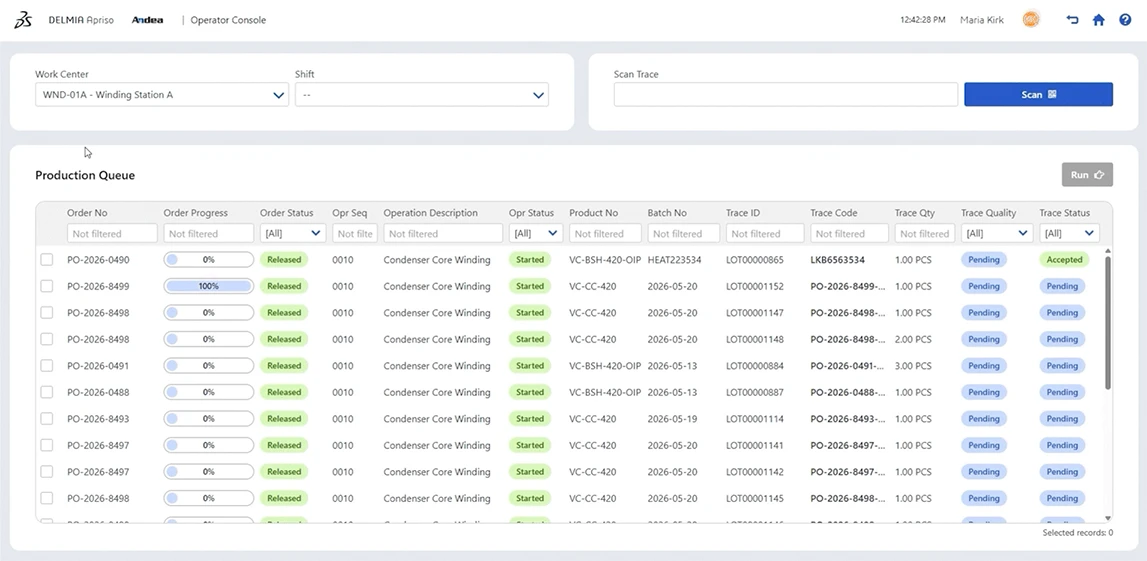
  • Production Control: real-time status across every order in progress
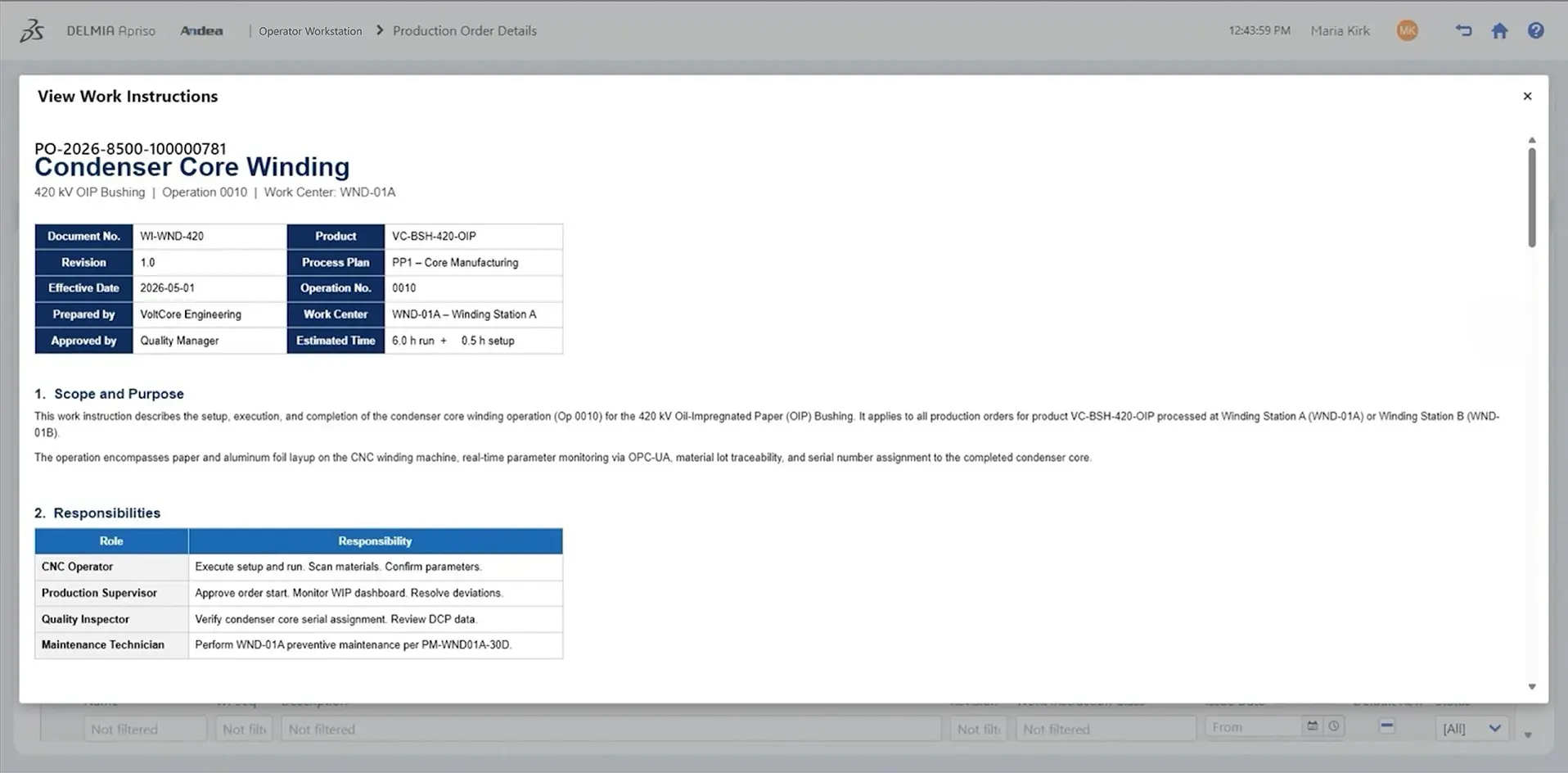
  • Process Sheets: the routing and instructions for the current unit
  • Product Card: the record tied to a single serial number
  • Label Printing: traceable labeling at the point of production 

Quality & Traceability
  • Quality Inspection: captures and evaluates each test result against its limits
  • Event Monitor: logs quality events and flags non-conformances
  • Check Sheet: structured in-process checks tied to the unit
Performance & Maintenance
  • OEE Monitor: tracks availability, performance, and quality losses
  • Maintenance Manager: schedules preventive work on critical equipment
  • Maintenance Spec Book: equipment maintenance specs and procedures
  • Skills Matrix: tracks certified operators for HV and coil work

A shared foundation sits under the three pillars: Data Loader pulls the order, BOM, and master data in, and DataBridge sends results back to your ERP and PLM. One version of the order, the BOM, and the routing runs across every module.

Baner CTA Background
See how it runs on the floor

A working demo walks the screens your team would use, from the operator workstation through quality and test capture to the maintenance views. We can set it up on your own process.  

See the demo

Standing up a new plant? Skip the year you'd normally lose to the MES

Icon background Speed

New capacity used to take years to reach full production, and a surprising share of that delay had nothing to do with standing up a new building or installing the equipment. It was the manufacturing software: months of workshops just to decide what the system should do, followed by a build-out before a single unit could run through it.

Icon background Circle Puzzle

Andea GridUp removes that phase. The routing, quality capture, build history, and ERP and PLM integration an electrical equipment plant needs are already modeled before you break ground. Your team configures the last 20%, your specific routings, your specific tests, instead of designing a system from a blank screen while the building goes up around it.

Icon background Robot Arm

That matters most right now. Manufacturers aren't just fighting backlog in existing plants, they're racing to bring new ones online to keep up with demand, and the expectation from leadership is that a new facility reaches production in a fraction of the time it used to. A prebuilt MES is one of the few levers that actually shortens that timeline, because the software readiness question is answered before the first machine is installed.

Icon background Efficiency

What this looks like in practice:

  • Commissioning runs against a working system, not a specification document
  • Operators train on real screens and real routings from day one of production, not day one of a multi-year rollout
  • New-plant data (routings, BOMs, test plans) can be modeled in parallel with construction, not after it

Production planning and execution for engineer-to-order builds

Andea GridUp drives the floor from the released order, so the instructions in front of an operator always match the unit on the bench.

  • Each unit gets its own routing and process sheet, pulled from the order and the bill of materials.
  • Operators always see the current revision on the Operator Workstation, never a printout from last month.
  • Production Control shows where every order stands, from core-and-coil work through final assembly, so a build that runs for months still reports its status in real time.

This is where generic systems fall short. Repetitive-line software assumes the next unit looks like the last one, and in an engineer-to-order plant it rarely does, and the routing has to follow the drawing for that specific unit.

Quality and traceability for high-voltage testing

Andea GridUp captures every result as the work happens and checks it against its limits automatically.

  • Quality Inspection records each result against the serial number and evaluates it against defined limits in real time. An operator can't close a step until the required entries are complete, and any out-of-spec result is flagged for supervisor review.
  • Event Monitor keeps a history of every quality event and sends an alert the moment something falls out of spec, so nothing goes unrecorded. Those records export to Excel and PDF for customer reports and audit responses.

This is what separates in-process capture from after-the-fact reporting: results are recorded at the operation, as the work happens, and checked against their limits on the spot, not reconstructed later.

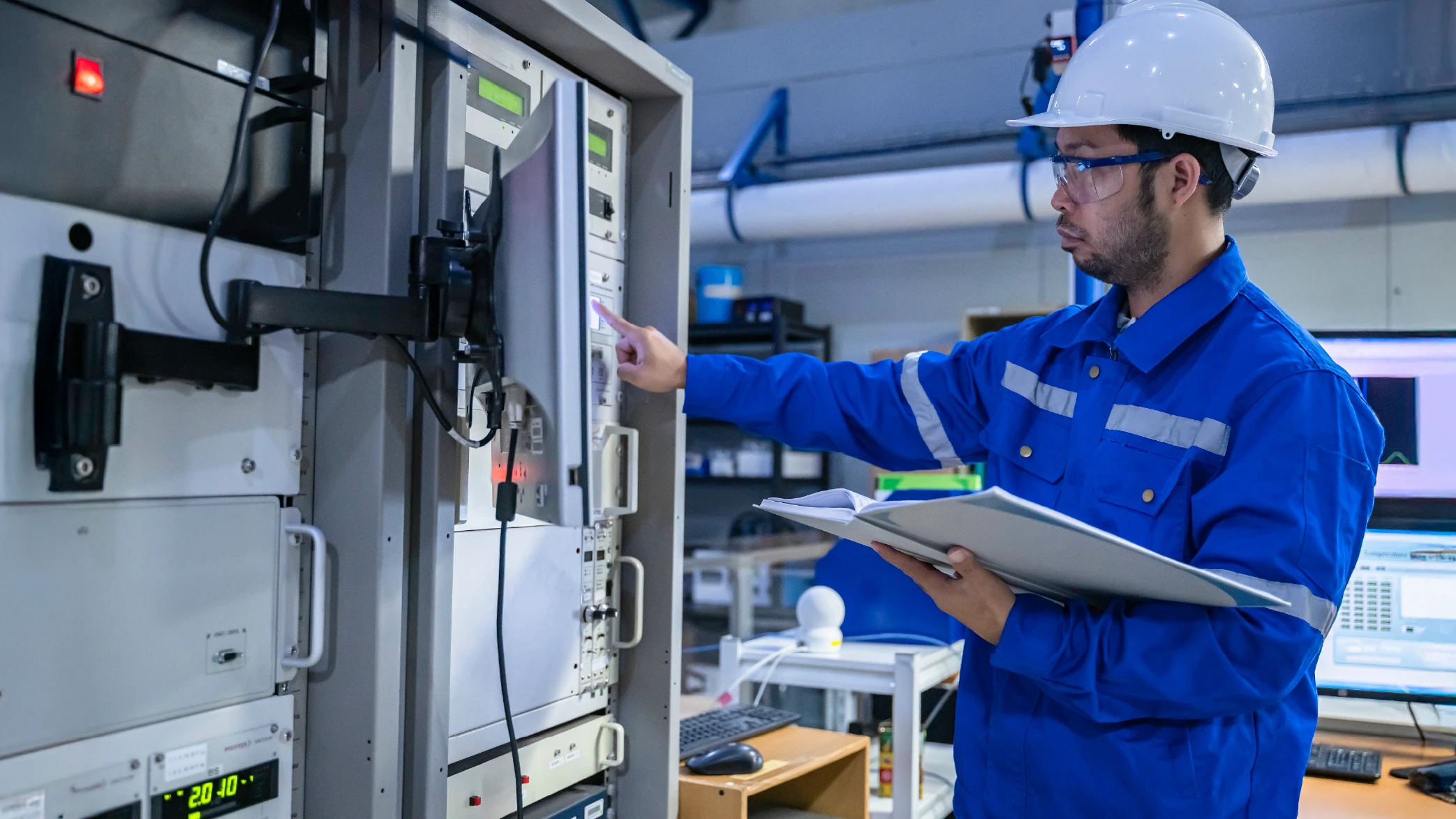
An engineer in a blue jumpsuit and hard hat studies a document while pressing a button on complex industrial electrical equipment. This visual represents manufacturing operations and digital transformation solutions.
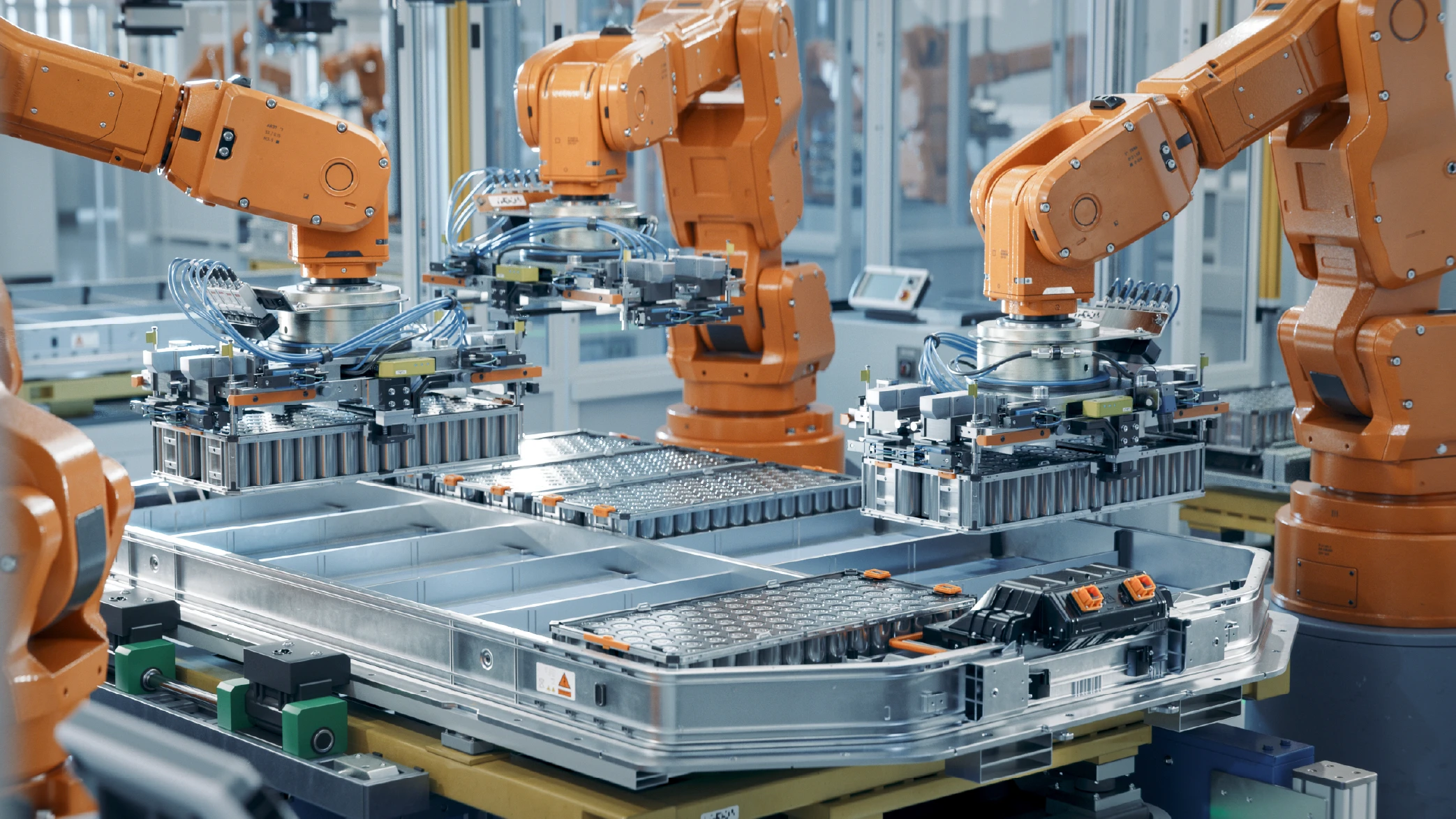
Orange robotic arms precisely assembling electric vehicle battery packs on an automated manufacturing line, crucial for advanced production planning and MES solutions in the automotive industry.

Performance and maintenance for months-long orders

A transformer order can sit on the floor for months, so machine uptime and skilled labor decide whether it ships on time.

  • The OEE Monitor tracks availability, performance, and quality, the three components of Overall Equipment Effectiveness (OEE), and surfaces whatever is stretching out a long build.
  • Maintenance Manager schedules preventive work on the equipment an order depends on, so a press or a winding machine doesn't stall a unit halfway through.
  • The Skills Matrix tracks which operators are certified for coil winding, core stacking, and HV assembly, and matches them to the jobs that need them.
  • Data Loader and Data Bridge keep this pillar in sync with the rest of the system, so finance and engineering see the same record the floor produced.

Traceability and high-voltage compliance for utility audits

A utility calls about one serial number, two years after delivery. How long does the answer take? On paper, it takes days: someone pulls travelers out of storage, finds the test sheets, and rebuilds the history by hand.

With Andea GridUp, it takes minutes: pull the serial number, and the system reads back the whole build, every operation, the operator who ran it, and each recorded result, on a color-coded timeline you can export to Excel or PDF.

That's the difference between a quick, defensible answer and a scramble through old paper. For a maker of high-voltage equipment, it's the difference between having an exportable record from the moment of build and hoping the file still exists.

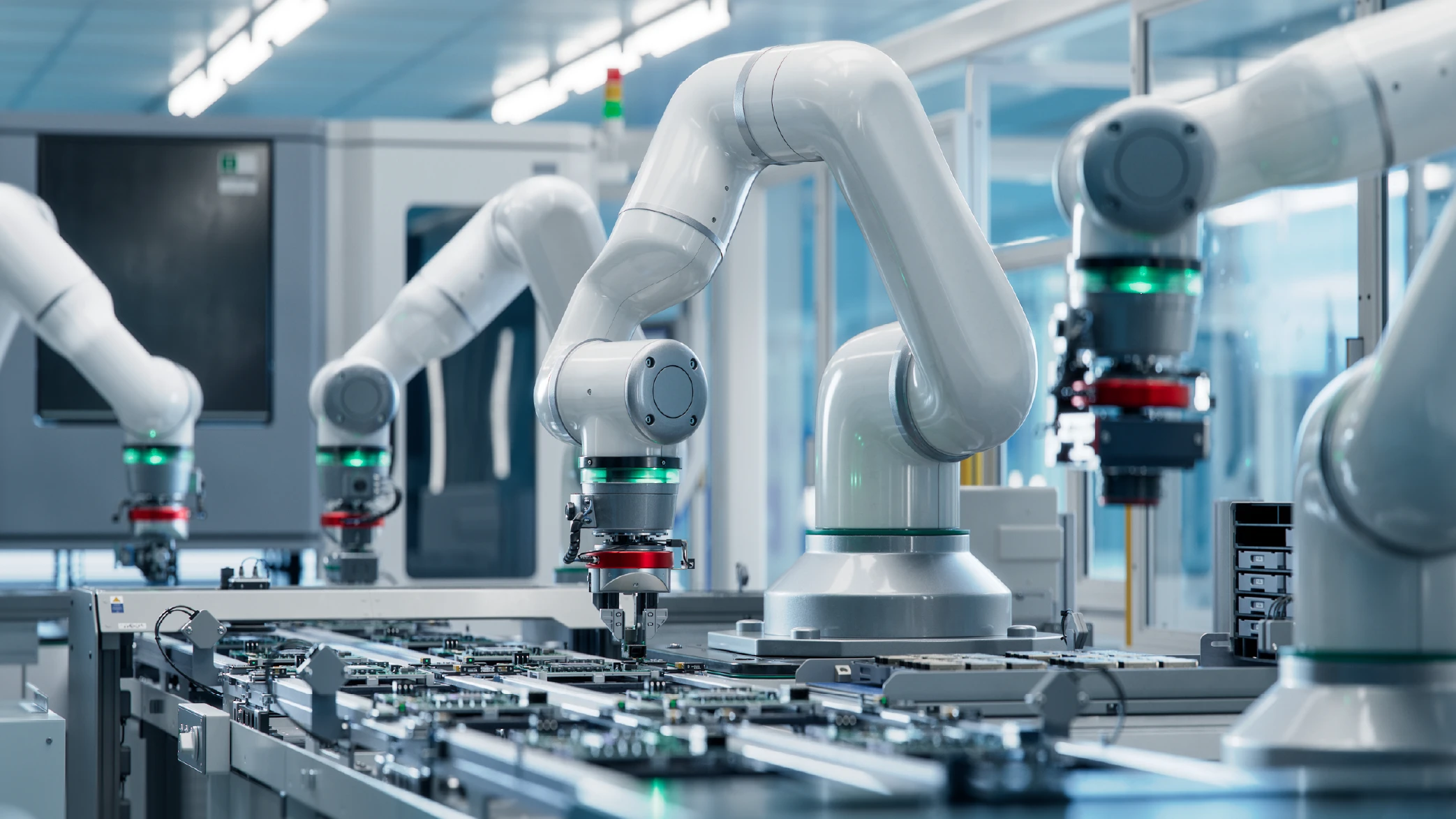
Automated robotic arms with green lights intricately assemble printed circuit boards on a sleek, modern production line. High-tech manufacturing environment.

Why a prebuilt MES fits electrical equipment manufacturing

Most manufacturers face a choice that feels like it shouldn't exist. Build from a clean slate, and you get a system that fits your process exactly, but you don't have a year or the budget to spend figuring out what it should do while orders back up. Buy a generic prebuilt MES, and you move fast, but you inherit a jack-of-all-trades tool built for no plant in particular, and you end up bending your process to fit software that was never built for how you actually work.

Andea GridUp exists because that choice shouldn't be necessary. We put our most experienced architects on building the 80% of an MES that every electrical equipment plant genuinely needs, ETO routing, in-process quality capture, unit build history, ERP and PLM integration, on a platform built for flexibility, not a rigid, one-size-fits-all product. You get the speed of prebuilt and the adaptability of a platform, without paying for one at the cost of the other.

That's the difference between Andea GridUp and a generic prebuilt MES. A generic product is built to be broadly acceptable across industries, which means it's rarely built well for any one of them, and an electrical equipment plant configures around gaps a transformer or switchgear maker shouldn't have to explain to their vendor in the first place. Andea GridUp starts from a system that already understands a transformer. And because it's built on a genuinely flexible foundation, when your plant needs something beyond the 80%, that's a configuration, not a limitation, done by Andea's architects, not a workaround your team has to invent on their own.

The five types of software used in manufacturing

Most electrical equipment makers already run ERP and PLM. The gap usually sits at the shop floor, the layer that turns a plan into an operator's next step

Type What it does Where it sits
ERP Enterprise Resource Planning. Runs orders, finance, procurement, and inventory. Back office
MRP Material Requirements Planning. Turns the bill of materials into purchasing and material plans. Planning
MES Manufacturing Execution System. Drives the build, enforces quality and test, records traceability in real time. Shop floor
PLM Product Lifecycle Management. Holds drawings, revisions, and engineering change. Engineering
SCADA / IIoT Reads machine signals and process data from equipment on the line. Machine layer

MES vs ERP for electrical equipment manufacturing

An ERP plans the business. An MES runs the build. They answer different questions, and an electrical equipment plant needs both.  

Where ERP stops
  • Knows the order exists, its cost, and its ship date
  • Holds inventory levels and procurement
  • Plans the order and its ship date (not the floor schedule)
  • Stops at the shop-floor door
Where the MES starts
  • Knows which operator wound which coil
  • Captures each quality result in real time
  • Enforces the routing for this exact unit
  • Records each unit's build history in real time, so it's ready when an audit asks for it years later

Engineer-to-order work makes this split matter more, because the routing changes with every order. An ERP records the plan, but it doesn't enforce the routing, capture the inline test, or hold a failed unit on the floor, that's execution, not planning.

Andea GridUp is the execution layer: it reads the order, bill of materials, and master data from your ERP, then writes results back, so the two systems stay in sync without anyone keying data twice.

How to choose electrical equipment manufacturing software

Most systems fail on the same two: engineer-to-order routing and in-process quality capture, the areas a back-office system like ERP was never built to handle.

When you line up systems for an electrical equipment plant, evaluate vendors against the eight criteria below. Andea GridUp clears all eight out of the box.

Approve

Handles engineer-to-order routing, where the build changes with each order

Approve

Captures the quality tests your standards require as part of execution, and flags non-conformances

Approve

Builds unit-level genealogy tied to the serial number

Approve

Produces exportable records for your audits and standards reporting

Approve

Reads from and writes back to your existing ERP and PLM

Approve

Ships configured for electrical work, so rollout runs in months

Approve

Shows real-time floor status across builds that last months

Approve

Tracks operator skills for HV and coil work

Andea GridUp. A new product, built by an experienced team

Andea GridUp is new. The team behind it isn't. Andea has been building and running manufacturing execution systems for over a decade, with core architects whose experience reaches back to the enterprise MES platforms that shaped the field. They took what they learned across the shop floor and pre-configured it specifically for electrical equipment plants

Icon background Date
2014 Building MES since
Icon background Handshake
90+ Manufacturers served
Icon background Icon Achievement Copy
25+ Years of combined MES experience

Electrical equipment manufacturing software: common questions

BOOK A DEMO

See Andea GridUp in action

Tell us about your plant and we'll build the demo around it. You see the parts that matter to how you actually work.

The controller of the above-mentioned data is Andea Solutions Sp. z o.o based in Krakow, 42B Kapelanka Street, 30-347 Kraków, Poland, KRS: 0000419451 The purpose of data processing is to respond to your inquiry and, if consent is given, to provide commercial information about our products and services. You have the right to access the data, receive a copy of it, rectify it, delete it or request limitation of its processing, raise objections, and withdraw consent to contact for marketing purposes at any time - for this purpose, send an e-mail: rodo@andea.com. The full content of information on data processing can be found on the Privacy Policy page.

Read more